Oil-immersed and dry-type distribution transformers for utilities, industrial plants and commercial projects — quoted and built strictly against your rated voltage, vector group and loss requirements.
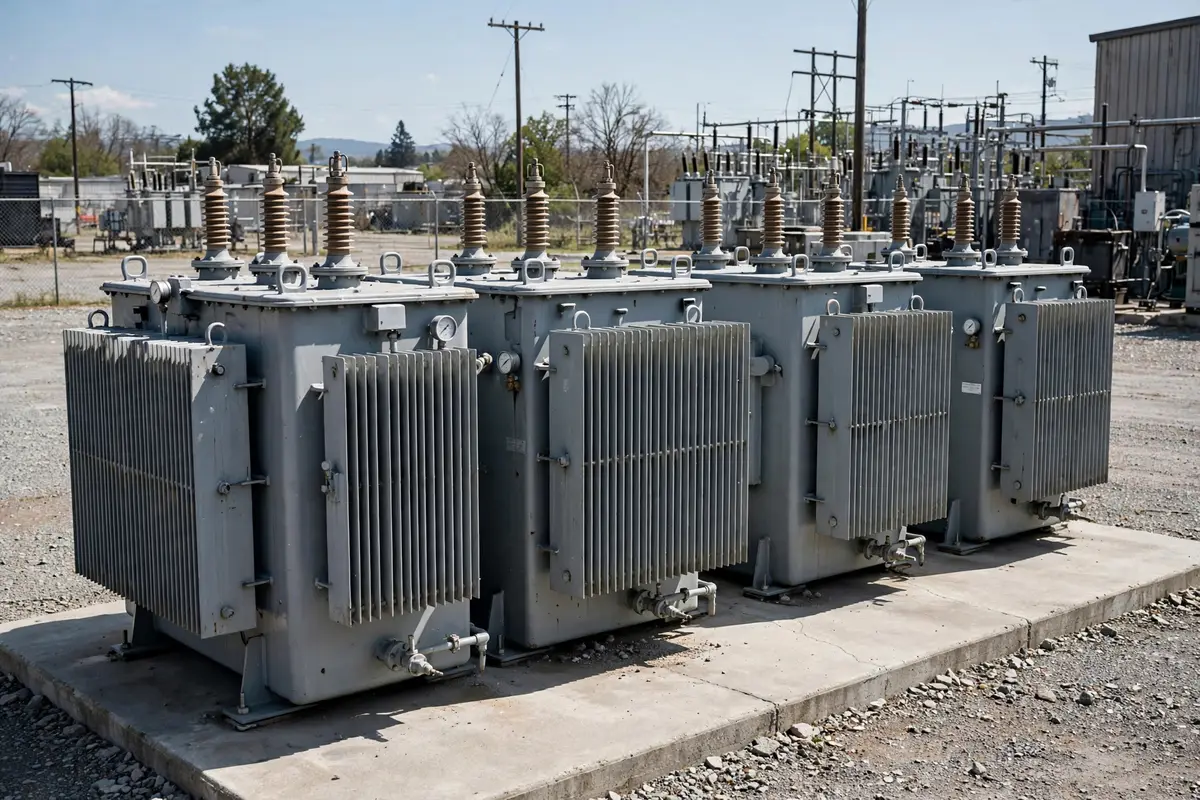
Oil-immersed units remain the workhorse for outdoor distribution; cast-resin dry-type units go indoors, into basements, hospitals and high-rise projects where oil is not accepted. Both are supplied with routine test reports for every unit.
Hermetically sealed or conservator type, mineral oil filled, corrugated or radiator tank. Pole-mounted, pad-mounted and ground-mounted versions, with off-circuit tap changer and standard protection fittings.
Cast-resin windings, AN or AF cooling, optional enclosure and temperature monitoring with fan control. The standard choice for indoor substations and fire-sensitive locations.
| Rated capacity | 25 – 2,500 kVA (typical range; other ratings on request) |
|---|---|
| Primary voltage | 6 / 10 / 11 / 15 / 20 / 22 / 33 kV class — exactly as specified, never substituted |
| Secondary voltage | 0.4 kV (400 / 415 V) typical; other LV voltages on request |
| Vector group | Dyn11 typical; Yyn0 and other groups per project specification |
| Cooling | ONAN / ONAF (oil-immersed) · AN / AF (dry-type) |
| Tap changing | Off-circuit, typically ±2 × 2.5%; on-load tap changer available on larger ratings |
| Frequency | 50 Hz or 60 Hz |
| Winding material | Copper or aluminium, as specified |
| Standard | Designed, manufactured and tested to IEC 60076 |
| Testing | Routine tests on every unit with individual test report; type test reports available for standard designs |
All values above are typical industry ranges for orientation. The final rating plate is fixed by your project specification and confirmed in the technical proposal before production.
A rating and a voltage are enough for a first quotation. For a final technical proposal, the useful details are: capacity (kVA), primary and secondary voltage, vector group, impedance, installation (pole / pad / indoor), quantity and destination port. If your project has an SLD, send that instead — we read the rest off the drawing.
Ask for a Quotation on WhatsApp GRIDVOLT